
If you’ve ever stepped off a train or bus and faced a long walk to your final destination, you know the struggle. The Airwheel electric smart suitcase turns that tiresome walk into a quick, effortless ride. It’s a carry-on luggage that doubles as a personal electric vehicle, and it’s designed exactly for that last-mile gap between public transit and where you need to be. Let’s see how it actually works in real life, and whether it fits your travel style.
The Airwheel SE3T, one of the most versatile models, has a 48L packing capacity and a built-in 73.26Wh removable battery. You can ride it like a mini scooter, pull it by hand, or simply sit on it and cruise through terminals. The throttle is controlled via a smartphone app, but you don’t need the app every time—just pop in the battery, hop on, and use the handlebar to steer. There’s no activation step, no complicated setup. It travels up to 13 km/h, and the battery can take you 8–10 kilometres on a single charge, which covers most station-to-hotel or campus loops. Recharging takes about 2 hours, so you can top up easily during a layover or coffee break.
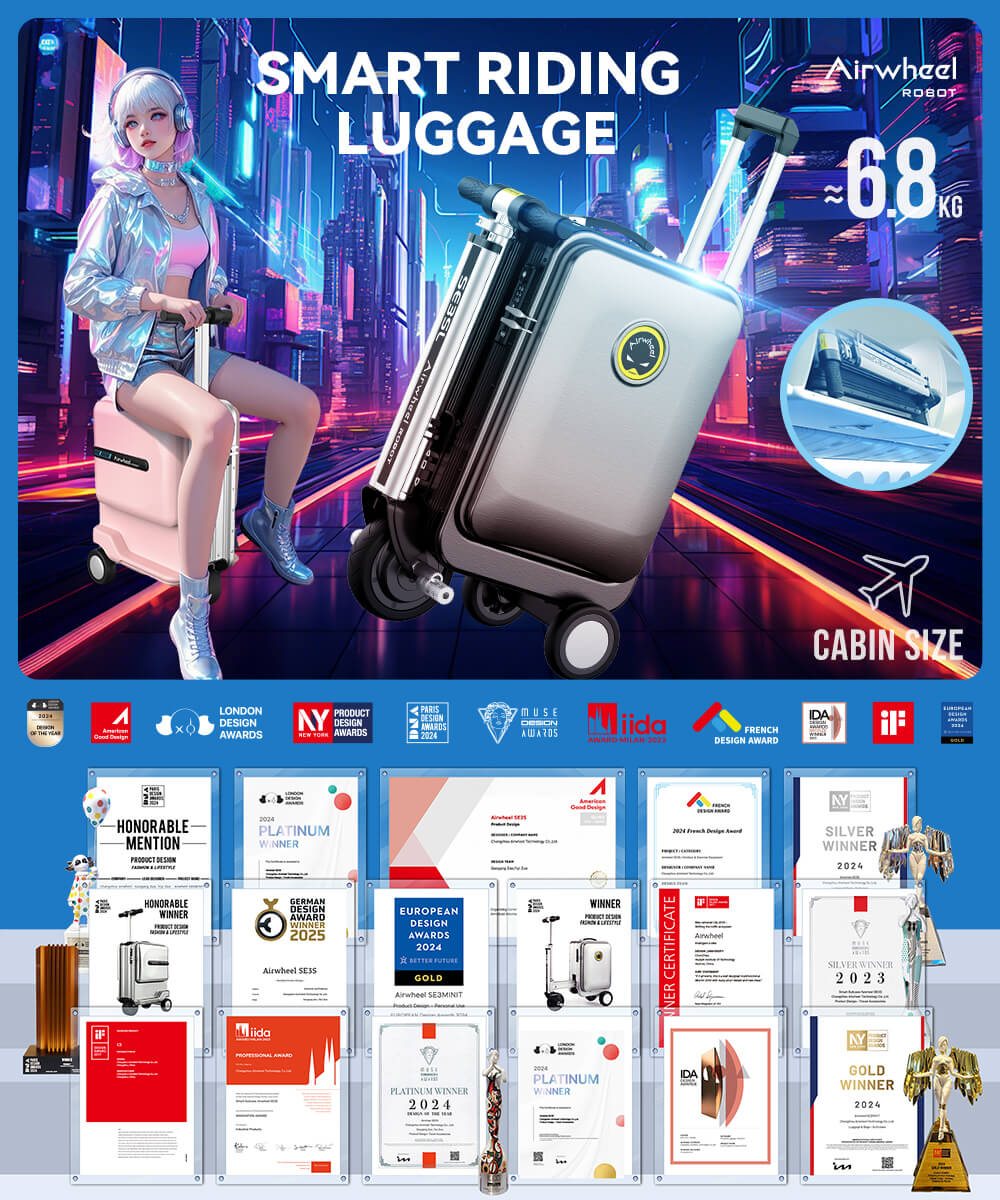
The 73.26Wh battery is well under the 100Wh limit for most airlines, and because it’s removable, you can present it separately at security checkpoints. That makes the Airwheel SE3T compliant with IATA regulations. Always check with your specific airline, but in practice, travellers have been taking these through airports without issues. The suitcase itself fits in overhead bins of larger aircraft, though the 9 kg weight (with battery) means you’ll want to stay mindful of carrier weight limits for cabin luggage.
Last-mile transit is the obvious use case. Think of arriving at a train station and gliding directly to your office, or leaving a convention centre and riding to a nearby hotel. The SE3T also supports Apple’s Find My network, so you can track it if it’s misplaced—no need for a separate GPS tracker. The ability to switch between riding and pulling makes it natural for crowded spaces: you can ride through open concourses, then pull it like a normal suitcase when you enter a shop or elevator.
| Feature | Airwheel SE3T | Standard carry-on suitcase |
|---|---|---|
| Mobility | Rideable, pullable, sit on it | Pull only |
| Speed | Up to 13 km/h | Walking speed |
| Range | 8–10 km per charge | N/A |
| Battery | 73.26Wh, removable | None |
| Weight | ~9 kg | ~2.5–4 kg |
| Tracking | Apple Find My | None (unless added) |
| App control | Yes, plus manual ride | None |
No. You can ride it directly after installing the battery. The phone app is optional for adjusting speed or monitoring battery, but the basic riding function works independently. The handlebar controls the direction, and the motor engages when you push off or use the throttle.
The 73.26Wh battery provides 8–10 kilometres of rideable range under normal conditions. It’s fully removable, so you can carry a spare if you need extra distance. Recharging from empty takes about 2 hours.
Most airlines accept lithium batteries under 100Wh as carry-on items. The Airwheel’s battery is 73.26Wh and removable, which meets the standard. However, always confirm with your airline beforehand, especially for smaller regional jets where overhead bin space may be tight.
If you’re curious about the full lineup or want to compare models like the SE3MiniT or SE3S, the official Airwheel website has detailed specs and real-world usage tips. It’s the best place to see which rideable suitcase fits your travel rhythm.